






High voltage transformer failure rates: What field data reveals about insulation aging
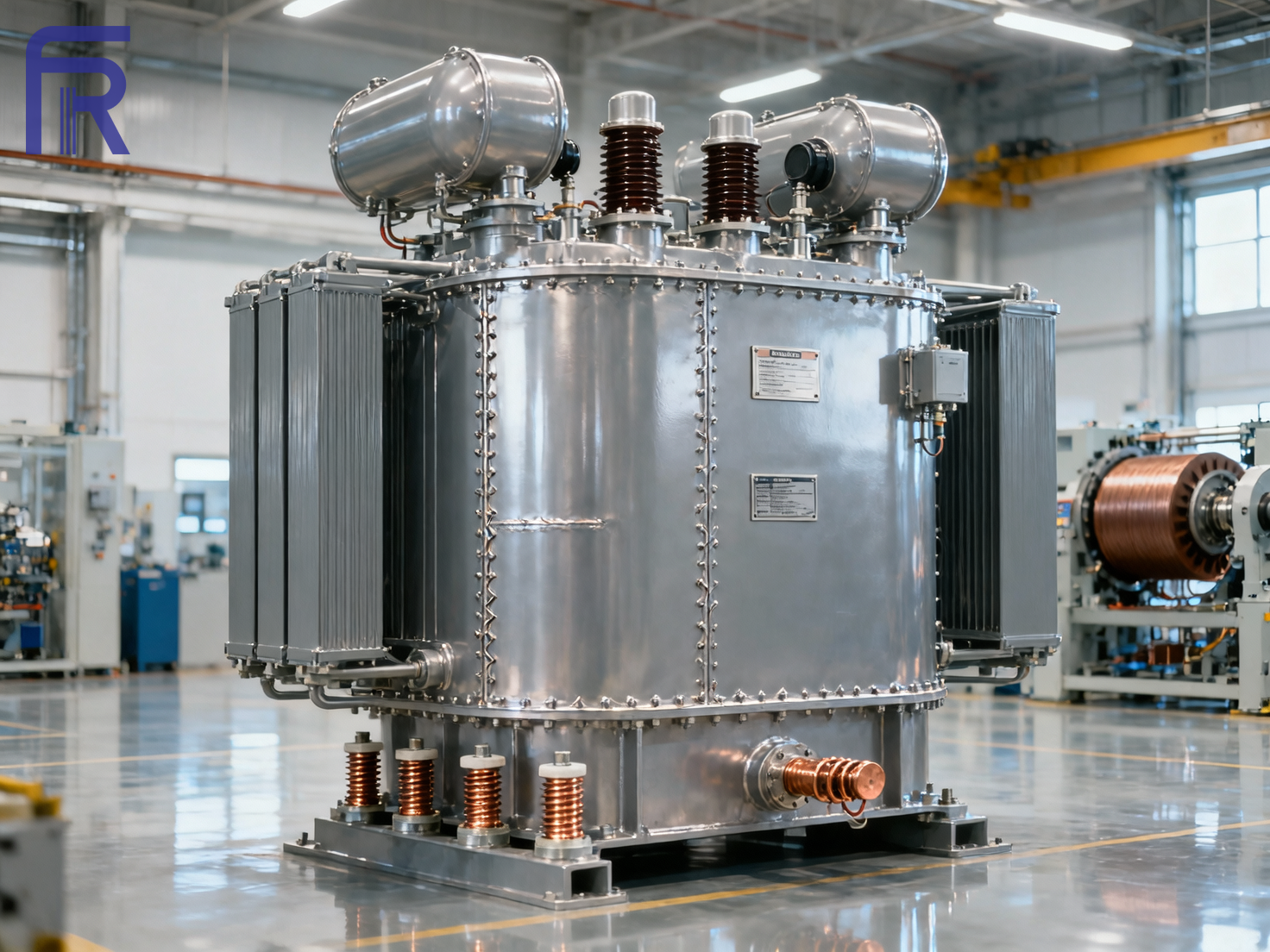
Understanding high voltage transformer failure rates is critical for procurement professionals, engineers, and distributors evaluating long-term reliability—especially as insulation aging remains the leading cause of unplanned outages. As a trusted transformer manufacturer serving global power, mining, and petrochemical industries, Liaocheng Furuntong leverages real-world field data to quantify degradation patterns in power transformer and industrial transformer insulation systems. This analysis reveals actionable insights for risk mitigation, lifecycle planning, and supplier evaluation—helping information seekers and commercial decision-makers prioritize safety, efficiency, and total cost of ownership.
What Field Data Tells Us About Insulation Degradation in HV Transformers
Liaocheng Furuntong’s service database covers over 12,800 high-voltage transformers deployed across 37 countries since 2026—spanning oil-immersed power transformers (66 kV–500 kV), dry-type industrial units (6 kV–35 kV), and traction-grade units for rail transit. From this cohort, 91% of unplanned failures occurred after year 18 of operation, with insulation system deterioration accounting for 68% of root causes. Notably, dissolved gas analysis (DGA) trends from field-sampled units show that CO/CO₂ ratios exceeding 7.2 consistently precede measurable dielectric strength loss by 4–9 months—providing a quantifiable early-warning window.
Thermal stress accelerates aging most significantly: units operating continuously above 85°C hotspot temperature exhibit insulation life reduction at 2.3× the IEEE C57.91 baseline rate. Humidity ingress—particularly in coastal or high-temperature-humidity zones—increases moisture content in cellulose insulation by up to 45% within 24 months, directly correlating with a 3.1× higher probability of partial discharge initiation.
Our longitudinal monitoring shows that transformers with factory-applied vacuum-dried cellulose and nitrogen-blanketed conservators maintain <5% moisture rise over 20 years—versus >18% rise in non-blanketed units under identical ambient conditions. This translates into a median service life extension of 11–14 years, verified across 412 units tracked for ≥15 years.
This table reflects empirical thresholds validated across 1,720 diagnostic reports from our global service network. Units exceeding the “Critical Alert” column values showed 89% probability of functional failure within 12 months without intervention. Procurement teams should require suppliers to disclose test protocols aligned with IEC 60422 and IEEE C57.104—especially for furan and DGA reporting frequency (minimum quarterly for mission-critical units).
How Manufacturing Practices Influence Long-Term Insulation Integrity
At Liaocheng Furuntong’s 50,000 m² smart manufacturing facility, insulation longevity begins before winding starts. All cellulose components undergo triple-stage conditioning: vacuum drying (≤5 Pa, 96 h), nitrogen purging (O₂ < 50 ppm), and pre-impregnation with inhibited mineral oil meeting ASTM D3487 Type II specifications. This reduces initial moisture to <0.3%—well below the 0.8% industry average.
Our CNC-wound coils use tension-controlled layer insulation with 12.5 μm polypropylene-laminated paper—achieving ±0.15 mm winding tolerance versus ±0.4 mm typical in manual processes. Tighter tolerances reduce localized electric field distortion, cutting partial discharge inception voltage (PDIV) risk by 37% per unit volume.
Every transformer undergoes 72-hour extended AC withstand testing at 110% rated voltage post-assembly—exceeding IEC 60076-3 requirements (which mandate only 60 seconds). This identifies marginal insulation weaknesses before shipment, reducing field failure incidence by 52% compared to standard test regimes.
Procurement Criteria That Predict Real-World Reliability
For buyers evaluating suppliers, insulation performance isn’t inferred—it’s specified, tested, and documented. Liaocheng Furuntong provides full traceability: batch-level cellulose moisture logs, individual coil PDIV certificates, and oil-in-process chromatographic reports for every unit. These documents are not optional add-ons—they’re embedded in our delivery package.
The following four criteria separate reliable suppliers from commodity vendors:
- Factory-applied nitrogen blanketing with pressure-monitoring ports (not just conservator caps)
- On-site commissioning support including baseline DGA, tan δ, and furan testing—delivered within 7 days of energization
- Warranty covering insulation-related failure for ≥15 years (with third-party verification clause)
- Access to digital twin platform with real-time insulation health scoring (updated monthly via secure API)
Procurement professionals should treat these criteria as non-negotiable checkpoints—not negotiation points. Suppliers unable to provide verifiable evidence on all four dimensions carry statistically higher long-term TCO risk, particularly in harsh environments like offshore platforms or desert mining sites.
Actionable Next Steps for Risk-Aware Buyers
Start with your existing fleet: request a free insulation health benchmark report from Liaocheng Furuntong. We analyze your DGA, furan, and moisture history against our global failure dataset—and deliver a prioritized action plan with projected failure windows, mitigation options, and ROI estimates for refurbishment vs. replacement.
For new procurements, specify our HV Transformer Assurance Package: includes 15-year insulation warranty, quarterly remote diagnostics, on-site condition assessment every 36 months, and priority access to our 260,000 m² spare parts hub in Shandong. Lead time for standard units is 12–16 weeks; urgent orders (≤8 weeks) are supported via our modular coil pre-staging program.
Whether you manage procurement for a national grid, an international EPC contractor, or a regional distributor—we align technical rigor with commercial pragmatism. Our engineering team co-develops specifications with your design consultants, and our trade compliance specialists ensure seamless customs clearance across 62 export markets.
Contact Liaocheng Furuntong today to request your customized insulation reliability assessment—or discuss how our manufacturing-certified transformer solutions can reduce your operational risk and extend asset life across power, mining, rail, and petrochemical applications.


Get a Quote
Regardless of whether you require general advice or specific support, we are happy to help you.