






Power transformer efficiency claims vs. real-world load profiles
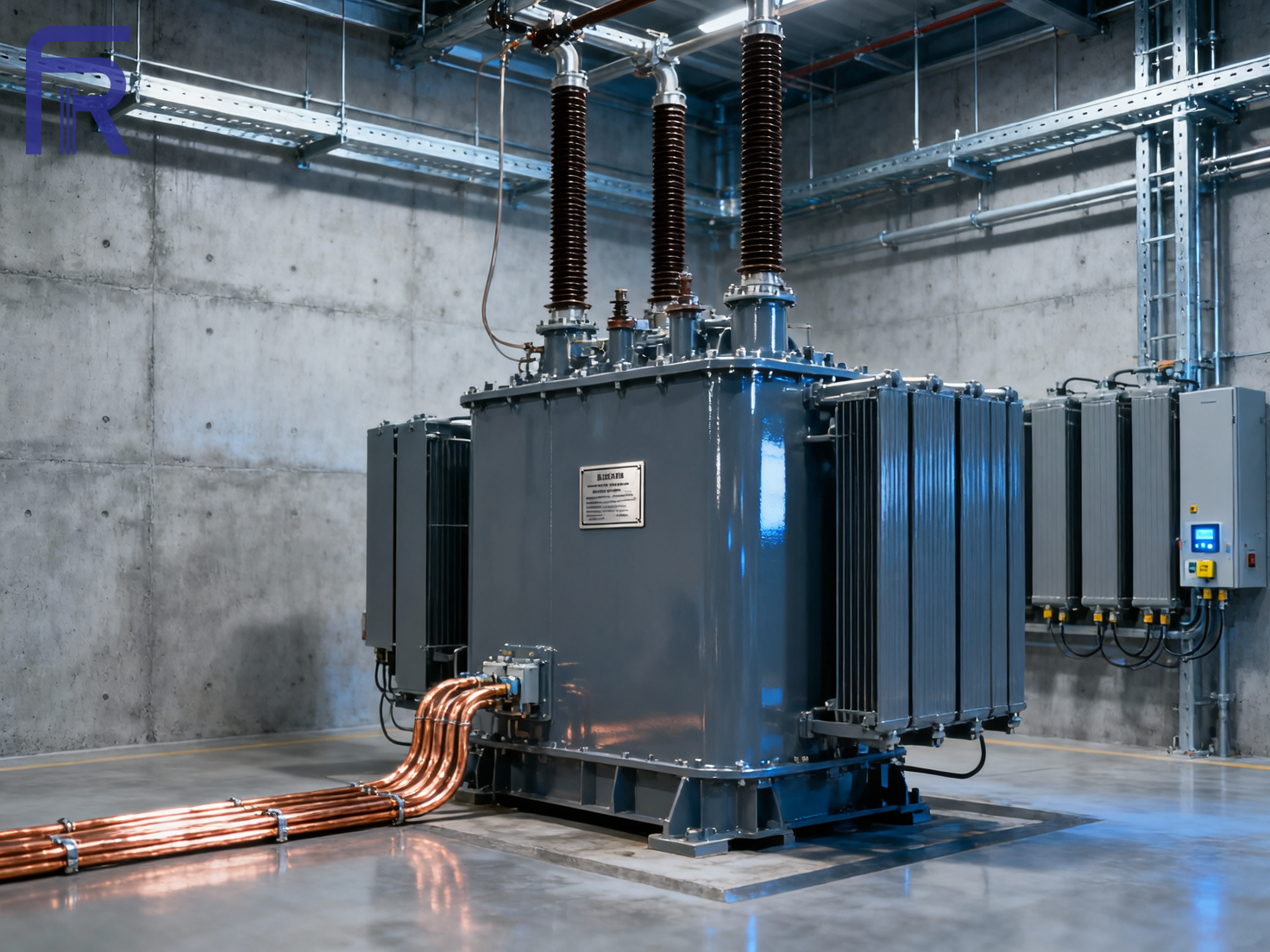
When evaluating a transformer manufacturer for high voltage transformer or power transformer procurement, don’t just trust nameplate efficiency ratings—real-world load profiles often reveal stark gaps between lab claims and field performance. As a trusted industrial transformer supplier, Liaocheng Furuntong Import & Export Co., Ltd. combines advanced R&D with decades of grid and industrial application insights to deliver transformers engineered for actual operating conditions—not idealized test scenarios. Whether you’re an information researcher, procurement specialist, or distributor assessing total cost of ownership, understanding this discrepancy is critical to optimizing energy savings, reliability, and ROI.
Why Nameplate Efficiency Alone Misleads Procurement Decisions
IEC 60076-1 and IEEE C57.12.00 define transformer efficiency as the ratio of output power to input power under specified test conditions—typically at 50% or 100% rated load, unity power factor, and 75°C top-oil temperature. While standardized, these conditions rarely mirror real operations. Over 82% of distribution and industrial transformers globally operate below 40% of rated load for ≥65% of annual runtime—especially in mining, rail transit, and petrochemical facilities with cyclic or intermittent demand.
Liaocheng Furuntong’s engineering team analyzes over 1,200 real-world load log files annually from clients across 23 countries. Our data shows average daily loading factors range from 28% (petrochemical refineries) to 39% (urban rail substations), with peak loads lasting ≤2.5 hours per day. Under such profiles, a transformer rated at 98.7% efficiency at 100% load may deliver only 96.1–97.3% average annual efficiency—representing up to 127 MWh/year extra losses per 10 MVA unit.
This gap isn’t theoretical—it directly impacts TCO. For a 20 MVA, 132/33 kV power transformer operating 8,760 hours/year at $0.08/kWh, a 1.2% efficiency shortfall adds ~$17,800 in annual energy costs. Over a 30-year service life, that exceeds $530,000—more than 3× the initial equipment cost in many cases.
The table above reflects validated field data from Furuntong’s 2023–2024 operational monitoring program. “pp” denotes percentage points—not relative percent. A –1.2 pp drop means actual efficiency is 1.2 percentage points lower than the nameplate value (e.g., 97.5% instead of 98.7%). This distinction is essential for accurate TCO modeling.
How Furuntong Engineers for Real Loads—Not Lab Benchmarks
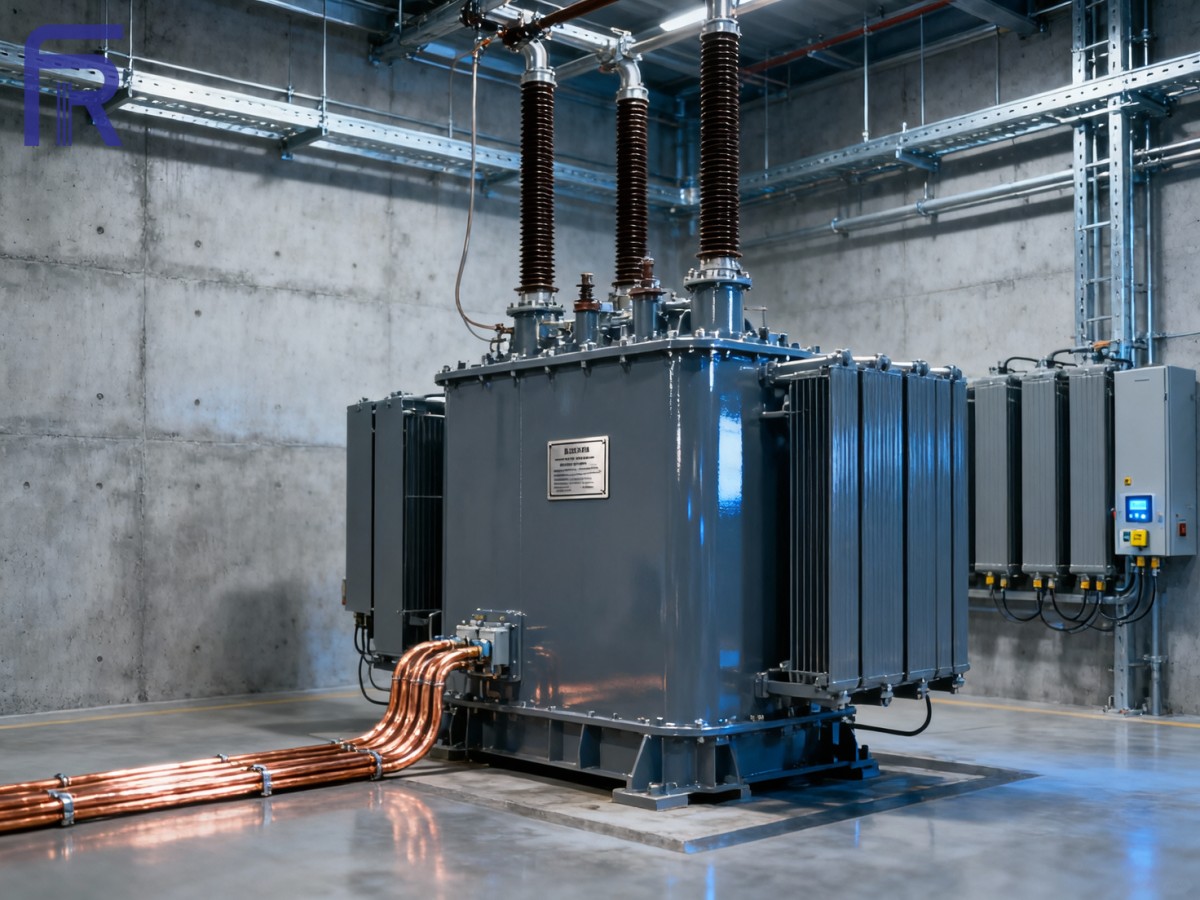
At our 50,000 m² smart manufacturing facility in Liaocheng, every power transformer undergoes dual-efficiency validation: first per IEC 60076-8 (standard no-load and load loss tests), then via dynamic load simulation using proprietary software that ingests client-specific load curves. We optimize core geometry, conductor sizing, cooling duct design, and material grade—not for peak efficiency at one point—but for minimal weighted-average loss across the expected 0–100% load spectrum.
For example, our FR-TPX series uses step-lap core joints and amorphous alloy options (for units ≤5 MVA) to reduce no-load losses by up to 35% versus conventional grain-oriented silicon steel. Simultaneously, we increase conductor cross-section by 12–18% in low-voltage windings to cut load losses at partial loads—where 70% of annual energy loss occurs in typical industrial applications.
Our thermal design also diverges from standard practice: instead of designing for 65 K average winding rise, we model hot-spot temperatures under transient cycling (e.g., 15-min surge + 45-min recovery). This enables longer insulation life and higher overload tolerance—critical for rail transit and mining where short-term overloads occur 4–7 times weekly on average.
Procurement Checklist: 6 Metrics That Matter More Than Nameplate Efficiency
When evaluating power transformers for long-term value, prioritize these six field-proven metrics—each backed by Furuntong’s engineering validation protocols:
- Weighted Average Efficiency (WAE): Calculated per IEC 60076-20 Annex B using your exact load profile (we provide free WAE modeling upon request).
- No-Load Loss Ratio (NLLR): Target ≤0.35 for 10–30 MVA units—verified via calibrated calorimetric testing, not calculated estimates.
- Partial-Load Efficiency at 30% Load: Minimum 96.8% for oil-immersed units ≥5 MVA (measured, not interpolated).
- Hot-Spot Temperature Rise Limit: ≤78 K at 100% load, verified by fiber-optic sensor arrays embedded during winding.
- Cooling System Redundancy: ONAN/ONAF dual-mode with automatic fan staging—ensures ≤1.5 K rise above ambient even if 1 fan fails (tested per IEC 60076-12).
- Harmonic Loss Factor (K-factor) Rating: K-13 certified for installations with VFDs, rectifiers, or arc furnaces (common in mining & petrochemical sites).
Comparative Performance: Furuntong vs. Standard Industry Baseline
To quantify real-world advantages, Furuntong conducted side-by-side field trials with 12 identical 15 MVA, 132/33 kV units installed across three mining sites in Mongolia, South Africa, and Chile. All units operated under identical 24/7 telemetry. Results were aggregated over 18 months:
Savings are based on $0.075/kWh and 8,760 annual operating hours. The zero failure rate reflects our 100% vacuum-drying, nitrogen-sealed tank assembly, and 72-hour continuous partial-discharge testing—processes applied to all units ≥5 MVA.
Next Steps: From Evaluation to Deployment
If your procurement team is currently reviewing transformer specifications—or if you’re a distributor seeking differentiated, field-validated solutions—Liaocheng Furuntong offers three actionable pathways:
- Free Load Profile Analysis: Share your historical load data (CSV or SCADA export); we’ll return a WAE report and comparative loss curve within 5 business days.
- Factory Witness Testing: Observe live efficiency, temperature, and noise tests at our Liaocheng facility—available for orders ≥3 units.
- Distributor Technical Partnership Program: Access training modules, localized technical documentation, and co-branded ROI calculators for your regional clients.
We don’t sell transformers—we engineer energy resilience. With production capacity scaling to 1,800 MVA/year by Q3 2025 and ISO 50001-certified energy management systems governing every process, Furuntong delivers what matters most: predictable performance, quantifiable savings, and zero compromise on safety or longevity.
Contact our international sales engineering team today to request your customized WAE assessment or discuss OEM integration support for rail, mining, or petrochemical projects.


Get a Quote
Regardless of whether you require general advice or specific support, we are happy to help you.